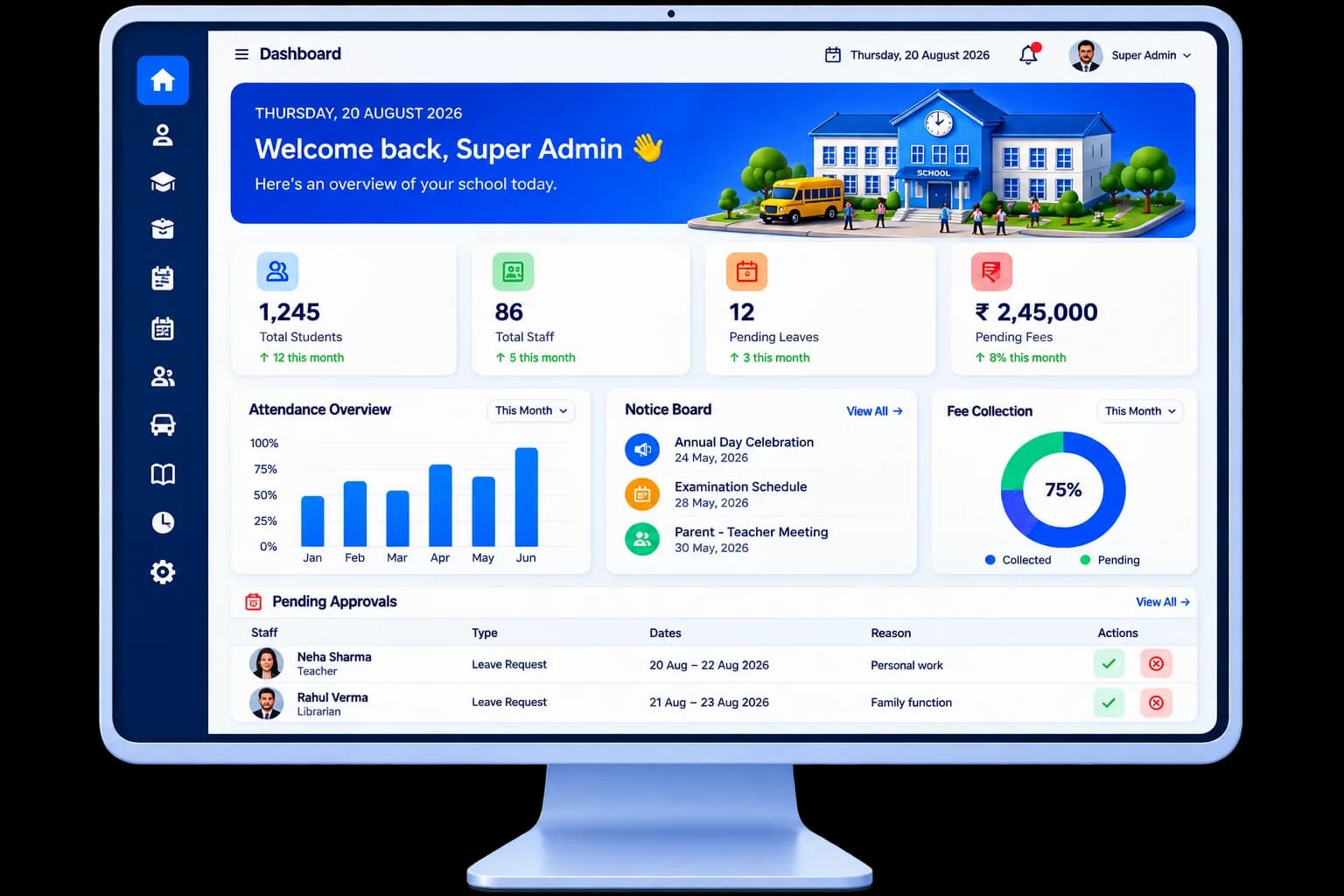

For most schools, fees are the lifeline of daily operations — salaries, maintenance and development all depend on them. Yet fee collection is often handled with receipt books and spreadsheets that make it hard to know, at any moment, who has paid and who hasn't.
1. Set up a clear fee structure
The first step to better fee management is a clear fee structure in the system. Tuition, admission, transport, exam and other charges can be defined once per class, with installments and due dates, so every student's payable amount is calculated automatically instead of by hand.
2. Record concessions against the student
Concessions and scholarships are where manual systems usually go wrong. Sibling discounts, staff-ward concessions and special waivers should be recorded against the student so they're applied consistently every term — not remembered (or forgotten) by whoever is at the counter.
3. Issue instant receipts
Every payment should generate a printed or digital receipt instantly, with the remaining balance shown. That single change cuts down on disputes with parents, because both sides can see exactly what was paid and when.
4. Follow up on dues early
With collections recorded in one place, the office can pull up a pending-dues report by class or section in seconds and follow up early — through reminders to parents rather than awkward last-minute calls.
Early, polite reminders consistently recover more fees than late, urgent ones.
5. Let reports build themselves
Good fee software gives management daily and monthly collection reports without anyone having to compile them. The result:
- Cash flow becomes predictable.
- Audits become easier.
- The accounts team gets back hours every week.
Where to start
ZnexEdu's fee management module was designed around how Indian schools actually collect fees — installments, concessions, transport charges and all. If fee follow-ups are taking over your office, book a demo and see it in action.